Operando bioelectrocatalysis
By combining advanced operando and in situ techniques directly with electrochemical control, our platform enables the real-time observation of redox states, structural dynamics, and catalytic function as they unfold simultaneously. We leverage a comprehensive analytical suite—including X-ray absorption spectroelectrochemistry, FTIR, EPR, circular dichroism, EC-MS, Raman, UV-Vis, and single-fiber electrochemistry—to map electronic structures, monitor conformational shifts, and track functional intermediates at molecular and single-entity resolution.

Bioinspired Electrocatalysis
By decoding the architectural and mechanistic principles of native metalloenzymes, we design bio-inspired molecular interfaces that drive efficient energy conversion and carbon transformations. Our research bridges natural biological catalysts—such as hydrogenases, nitrogenases, and oxygen-evolving complexes—with synthetic biomimetic catalysts and custom-engineered artificial proteins to accelerate fundamental electrochemical reactions, including CO2 reduction, H2 evolution and oxidation, O2 reduction, and water oxidation. By translating structural insights, outer-sphere microenvironments, and proton-coupled electron transfer networks into solid-state electrocatalytic interfaces, we pave the way for sustainable, carbon-neutral fuel synthesis and bio-hybrid renewable energy technologies.

Bioelectronics & Diagnostic Platforms
We bridge fundamental interfacial mechanisms with real-world technological applications, translating molecular charge transport dynamics into responsive, high-performance diagnostic tools. By engineering custom flexible electrodes and bio-functionalized interfaces, we build integrated biosensors, point-of-care testing (POCT) platforms, and wearable bioelectronic devices capable of continuous, non-invasive molecular sensing. This translational approach transforms fundamental insights into robust, scalable devices designed for real-time health monitoring, clinical diagnostics, and adaptive bio-machine interfaces.

Sustainable Energy & Living Systems
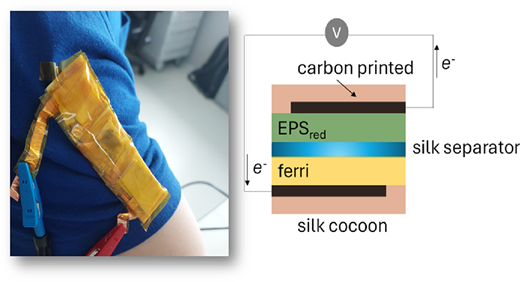
We unite biology and materials science into a coherent framework for sustainable energy, leveraging living systems and organic architectures to power next-generation technologies. Our research spans biobatteries, organic redox batteries, and biofuel cells that convert chemical potential directly into electrical power, alongside microbial systems and engineered living materials capable of autonomous repair, sensing, and energy generation. By integrating metabolic machinery with synthetic materials, we develop self-sustaining, circular energy technologies that harmonize power demands with ecological sustainability.